How Are Dentist Signs Made? What Are the Standard Sizes?
Dentist Sign Production and Standard Sizes: A Look at Aesthetics, Function and Regulations. Dentist signs are one of a dental
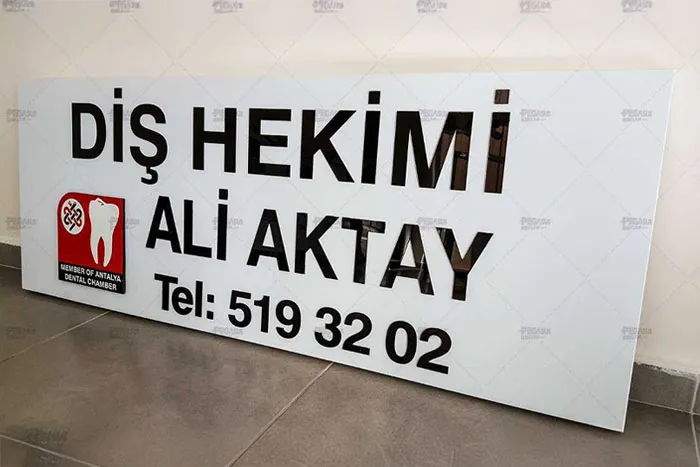
Dentist Sign Production and Standard Sizes: A Look at Aesthetics, Function and Regulations
A dentist's sign is one of the most important communication tools a dental clinic or practice has. As well as shaping patients' first impression of the clinic, it plays a key role in helping them find it and in building brand awareness. That is why the design, production, materials and size of a dentist's sign should be planned carefully, taking into account both aesthetics and legal regulations. In this article we look in detail at how dentist signs are produced, cover the different materials and techniques used, and review standard sizes in Turkey within the legal framework.
The Production Process: Design and Choice of Materials
Producing a dentist's sign starts with a detailed design stage. This is where the overall look of the sign, the fonts, colours, use of the logo and other visual elements are decided. The design should reflect the dentist's corporate identity while being easy to read and memorable. Key points to consider at the design stage include:
- Corporate Identity: The sign should reflect the dentist's corporate identity, i.e. the logo, colour palette and fonts. This helps build a consistent brand image.
- Target Audience: The design should suit the dentist's target audience. For example, a paediatric dentist's sign might be more colourful and playful, while a cosmetic dentist's sign might be more elegant and modern.
- Legibility: It is vital that the text on the sign can be read easily from different distances and in different lighting conditions. Use clear, large fonts and contrasting colours.
- Aesthetics: The sign should fit in with its surroundings and look attractive. Choose a design that takes into account the architecture and colours of the surrounding buildings.
After the design stage, the right materials need to be chosen. Common materials for dentist signs include:
- Aluminium: A light, durable, rust-free material. It can be painted or coated in different colours. It is generally used for channel letter signs or background panels.
- Acrylic (Plexiglass): A clear, glossy material that is easy to shape. It transmits light very well, which makes it ideal for illuminated signs. It is often used for channel letter signs, wayfinding signs and interior signs.
- Stainless Steel: A stylish, modern and durable material. Because it does not rust, it lasts a long time. Different designs can be created with laser cutting. It is a popular choice for channel letter signs and outdoor signs.
- Composite Panel: A material made of aluminium bonded with polyethylene. It is light, has a smooth surface and is easy to work with. It is used for facade cladding and background panels.
- Wood: Gives a natural, warm look. However, it has limited resistance to outdoor conditions. It is generally used for interior signs or where a rustic look is wanted.
The material should be chosen carefully according to the sign's location, design and budget. For outdoor signs, choose weather-resistant, long-lasting materials that are easy to clean. For interior signs, more decorative materials can be chosen.
Production Techniques: Cutting, Joining, Painting and Lighting
Once the materials have been chosen, the sign is produced using a range of techniques:
- Laser Cutting: A precise cutting technique used especially for metal and acrylic. Computer-controlled laser beams make it easy to cut complex designs and fine details.
- CNC Router: A technique used to cut wood, composite panel and some plastics. A computer-controlled milling bit cuts and shapes the material as required.
- Welding: A technique used to join metal parts. Different welding methods (MIG, TIG, etc.) are used to create strong, durable joints.
- Vacuum Forming: Thermoplastic materials such as acrylic are heated and drawn over a mould. This is used especially for producing 3D signs.
- Painting: Applying the colours and patterns of the sign. Different types of paint (acrylic, epoxy, etc.) and painting techniques (spray, brush, etc.) can be used.
- Digital Printing: Printing photos, logos or other graphics onto the sign. It is used especially for printing on materials such as composite panel and vinyl.
- Lighting: Illuminated signs use LED modules, neon tubes or fluorescent lamps. LED modules are the most popular lighting solution today, thanks to their energy efficiency, long life and ability to produce light in different colours.
Standard Sizes and Legal Regulations
The size and placement of dentist signs are subject to the relevant legal regulations in Turkey. These regulations aim both to protect the appearance of the streetscape and to maintain public order. In general, sign sizes are determined by the length of the building's frontage, the zoning plan for the area and the regulations of the local municipality (belediye).
There are no fixed "standard sizes" for dentist signs in Turkey. However, there are some sizes that are widely accepted and commonly seen in practice. Sign makers and dentists generally use these as a reference:
- Channel Letter Signs: The height of channel letters usually ranges from 30 cm to 60 cm. The length of the sign depends on the length of the clinic's name and the building's frontage.
- Background Panels: The size of background panels depends on the height of the building and the zoning plan for the area. They can typically be between 1 metre and 3 metres high.
- Wayfinding Signs: To ensure legibility, wayfinding signs are usually sized at around 20 cm x 30 cm or 30 cm x 40 cm.
Legal Regulations:
The following legal regulations should be taken into account regarding the placement and size of dentist signs:
- Local Municipal Regulations: Every municipality has its own signage regulations. These set out detailed rules on sign size, placement conditions, colours and other features. Dentists should review the relevant municipality's regulations and obtain the necessary permits before having a sign made.
- Turkish Dental Association Regulations: The Turkish Dental Association (TDB) publishes regulations that set the ethical rules and the principles of promotion for the dental profession. These may include restrictions on the wording, logos and other visual elements that can be used on dentist signs.
- The Zoning Law (İmar Kanunu) and Related Regulations: The Zoning Law and related regulations contain general rules on changes made to building facades. Installing a sign may be regarded as a change to the facade and must therefore comply with zoning legislation.
Conclusion
A dentist's sign is an important investment in the success of a clinic or practice. A sign produced with the right design, quality materials and suitable production techniques will strengthen the clinic's professional image, increase its ability to attract patients and raise brand awareness. During production, it is important to pay attention not only to aesthetics but also to legal regulations, and to obtain the necessary permits from the relevant municipality. This way you get a sign that both looks good and complies with the law. Remember: an effective dentist's sign is not just a way of directing people, it is also a marketing and communication tool.
Dentist Sign Production and Installation in Antalya and Alanya
For dentists working in the Antalya and Alanya area, we offer professional, eye-catching sign production and installation. This service covers the design and installation of signs that reflect a dental clinic's corporate identity, are easy for patients to spot and inspire a sense of trust.
Ask for a free site survey.
We quote the same day based on sizes and photos.